The Asset in the Back Room: How Clinics Should Price Trade-In Credit on Aging Equipment
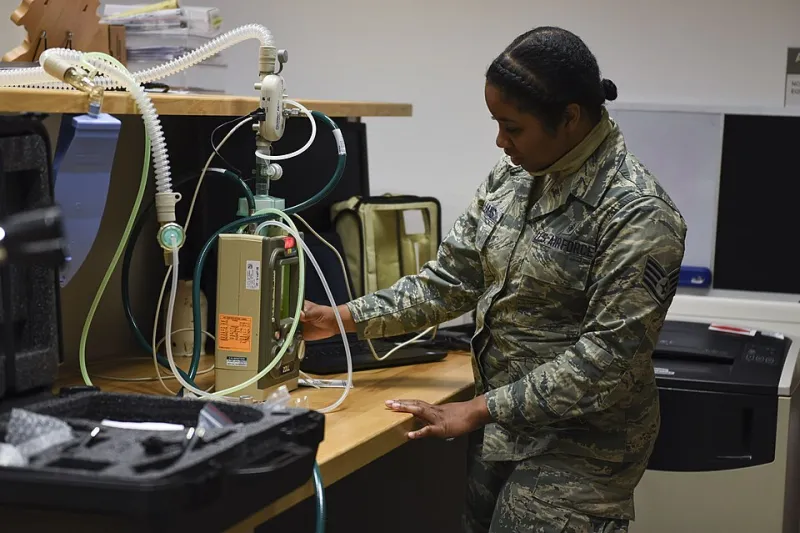
Photo: U.S. Air Force photo by Senior Airman Melody Howley, Public domain, via Wikimedia Commons
A vendor’s trade-in offer can arrive with the casual confidence of a courtesy: a single number, a short expiration date, and little explanation of how the old unit was priced. For clinics, that framing is misleading. Trade-in credit is not a gift attached to a purchase. It is a negotiated reduction in the cost of new equipment, and it should be treated with the same discipline as any other line item in a procurement file.
The clinic that accepts the first credit without documentation often does so because the new device quote is the urgent document on the desk. The old unit, by contrast, may be sitting in a storage room or still running the last of its useful shifts. That asymmetry favors the seller. A better approach is to price the asset before the sales conversation narrows to a single package.
Why the First Number Is Rarely a Valuation
A trade-in credit is not a market price. It is a commercial offer shaped by the vendor’s resale channel, refurbishment capacity, freight cost, and appetite for the used unit. Two vendors may quote very different credits for the same device because one plans to refurbish it for a domestic secondary market while another intends to harvest parts or export it. Neither number is inherently dishonest, but neither is a complete valuation.
Clinic buyers should separate three questions. What is the unit worth as a standalone asset? What will the vendor actually do with it? And what does the credit become when measured against the full purchase price, service terms, and delivery obligations? A credit that looks generous against a discounted new device may be less attractive than a smaller credit attached to a cleaner contract.
Build the Asset File Before the Sales Call
The most persuasive document in a trade-in negotiation is a factual record. Before requesting offers, assemble a file that any buyer or independent service organization could review without visiting the clinic. Include the manufacturer, model, serial number, installation date, and current software version. Add the maintenance history, including preventive service dates, repairs, and any outstanding faults. Photograph the exterior, controls, connectors, and any labels that show calibration or certification status.
If the device is imaging equipment or another regulated system, include the most recent inspection or compliance documentation that applies in your setting. Do not overstate condition, but do not let the vendor define it through a single visual inspection either. A service record showing consistent maintenance is an asset. A missing record is a negotiating weakness, which is why the file should be built while the unit is still in routine use.
Get a Second Opinion in Writing
Independent pricing does not require a formal appraisal for every old pump or exam table. It does require a written reference point. Ask at least one independent service organization, refurbisher, or secondary-market dealer for a purchase quote or a documented range based on the same asset file. For higher-value imaging systems, a paid appraisal may be justified. The goal is not to force the original vendor to match an outside number. It is to know whether the offered credit is within a defensible range.
When requesting outside quotes, be specific about the unit’s condition and what is included. A quote for a working system with a clean service history is not comparable to a quote for a unit sold as-is with no warranty. Ask whether the buyer will arrange freight, whether deinstallation is included, and whether the credit is contingent on inspection at their facility. Those conditions affect the real value of the offer.
Compare Credits on a Like-for-Like Basis
Trade-in offers are often presented inside a larger quote, which makes them difficult to compare. Create a simple comparison sheet. For each offer, record the gross price of the new equipment, the trade-in credit, the net price, freight and installation charges, service contract terms, and any fees for deinstallation or removal. If a vendor requires the clinic to use its rigging or freight provider, include that cost.
Then ask what happens if the old unit fails inspection after pickup. Some credits are provisional and can be reduced or revoked. Others are firm once the unit is removed. A provisional credit is not worthless, but it should be priced as a contingent amount. The clinic should know whether the vendor will return the old unit if the credit is reduced and who pays for that return.
Negotiate the Credit Against the Whole Deal
The credit is only one lever. Clinics can also negotiate installation, training, an extended warranty, preventive maintenance visits, or the cost of removing the old unit. A vendor may be more willing to improve those terms than to raise the headline credit. That does not make the credit irrelevant; it means the buyer should evaluate the entire package rather than fixate on the most visible number.
It is also reasonable to ask how the credit was calculated. A vendor that cannot explain the basis may be anchoring low. A vendor that provides a clear rationale, even if the number is modest, gives the clinic something to test against independent quotes. If the explanation is vague, ask for it in writing before signing.
Know When to Keep the Equipment
Walking away is a legitimate outcome. If the credit is far below independent quotes, if the vendor will not document the terms, or if the new purchase carries offsetting fees, the clinic may be better served by selling the unit through a secondary channel or retaining it as a backup. Retaining equipment has its own costs, including storage, service, and eventual decommissioning, but those costs can be compared.
The decision should be made before the new device quote expires. urgency is a negotiating tactic, not a clinical requirement. A clinic that has already documented the asset and gathered outside references can move quickly without accepting a weak credit.
Put the Number in the Contract
Finally, move the trade-in terms out of the sales email and into the purchase agreement. The contract should identify the old unit by serial number, state the credit amount, describe the conditions that could change it, and set a deadline for removal. If the credit depends on inspection, the inspection criteria should be written down. A credit that exists only in a quote summary is easy to dispute later.
Trade-in credit is not a favor bestowed on a loyal customer. It is consideration for an asset the clinic already owns. The clinics that fare best are the ones that arrive with a file, a reference point, and a willingness to compare the offer against the whole deal. The old unit in the back room may not be new, but it is not without value.